Геморрагический инсульт: лечение и реабилитация в Ставрополе - Нейро-клиника
Stavropol, 113B Shpakovskaya Street
Stavropol, 100 Shpakovskaya Street
Do good. Please leave a review about the results of your treatment!

Choose the platform where you want to leave a review:
8 (8652) 20-55-66
All services
All services
Consultations with doctors
Unlocking the brain's potential
Diagnostics
Tests.
Day hospital
Hardware treatment
Family-friendly services
Procedure room
rehabilitation
Physiotherapy
Educational activities for children
Diseases

The list of services is being updated.

For all necessary information, you can contact us by phone: 8 (8652) 20-55-66

The list of services is being updated.

For all necessary information, you can contact us by phone: 8 (8652) 20-55-66

Treatment of hemorrhagic stroke

Геморрагическая форма инсульта — это разрыв мозгового сосуда, при котором кровь изливается в вещество мозга или под его оболочки. В отличие от ишемического, где тромб перекрывает артерию и участок мозга «голодает» без кислорода, здесь происходит механическое разрушение ткани: кровь сдавливает нейроны, вызывает отёк и повреждает проводящие пути.

Масштаб последствий зависит от объёма излившейся крови и локализации разрыва. При небольших кровоизлияниях возможно значительное восстановление. При обширных — борьба идёт за каждый навык. Но старт реабилитации сразу после стабилизации состояния — это главный ключ к возвращению утраченных функций.
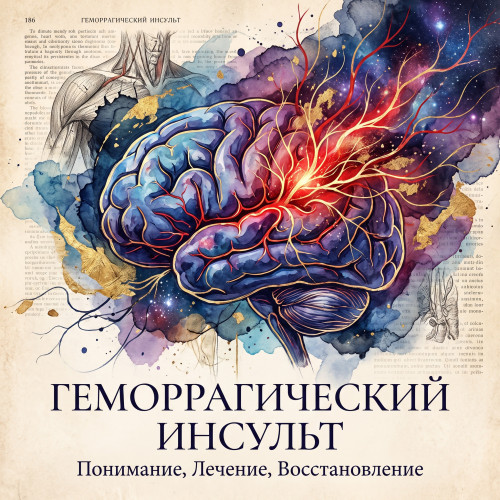
Treatment of hemorrhagic stroke

Hemorrhagic stroke is a rupture of a cerebral vessel, in which blood pours into the brain substance or under its membranes. Unlike ischemic stroke, where a clot blocks an artery and a brain area "starves" without oxygen, here mechanical tissue destruction occurs: blood compresses neurons, causes edema, and damages conductive pathways.

The scale of consequences depends on the volume of spilled blood and the location of the rupture. With small hemorrhages, significant recovery is possible. With extensive ones, the fight is for every skill. But starting rehabilitation immediately after stabilization is the main key to returning lost functions.

Causes and warning signs

The main cause of hemorrhagic stroke is uncontrolled hypertension. Every pressure spike hits the vessel wall like a hammer on glass. Sudden rises against the background of stress or missed medication are especially dangerous.

There are also hidden threats:

  • aneurysm — a "pouch" on the artery wall that does not bother until rupture;
  • arteriovenous malformation — a pathological tangle of vessels with thin walls;
  • taking anticoagulants without medical supervision.

A red flag: hemorrhagic stroke often begins with a "thunderclap" headache, which patients describe as the worst in their lives. If such a symptom appears, you must immediately call an ambulance.

What doctors do in the first hours

When a patient arrives at the hospital, every minute counts. First, a CT scan is performed — it instantly shows the hemorrhage, its volume, and location. The treatment strategy is fundamentally different from ischemic stroke. Thrombolytics are not used here — on the contrary, the bleeding must be stopped.

Doctors solve three tasks simultaneously:

  • stop the bleeding (blood pressure control, coagulation correction);
  • remove the hematoma (for extensive hemorrhages, neurosurgery is required — craniotomy and clot removal; for aneurysms — clipping or endovascular embolization);
  • relieve cerebral edema (special medications and elevated head position for fluid drainage).

After stabilization, the patient is transferred from the intensive care unit to the neurology department for further observation.

Rehabilitation: your personal recovery route

When the threat to life has passed, the main stage begins. Hemorrhagic stroke leaves behind not only motor impairments but also profound changes in the nervous system. Recovery requires a systematic approach. At the Neuro Clinic, rehabilitation is structured as a step-by-step path.

The process includes several key stages:

  • Diagnostic stage: a neurologist and rehabilitation physician assess motor, speech, and cognitive impairments, setting goals — from "sit up independently" to "return to work."
  • Motor stage: physical therapy, mechanotherapy, stabiloplatform training, fine motor skills development. A physical therapist and exercise therapy instructor work with the patient individually.
  • Speech stage: speech restoration for aphasia and swallowing for dysphagia using special protocols. A speech therapist conducts regular sessions.
  • Daily living stage: an occupational therapist teaches the patient to dress, hold a spoon, and use the bathroom again. Assistive devices are selected for a comfortable life.
  • Psychological stage: work with anxiety, apathy, and depression. A clinical psychologist helps build motivation for daily exercises.
  • Supportive stage: a treatment room for infusions and injections, day hospital. The patient comes on schedule and returns home the same day.

The entire team works according to a single plan, which is adjusted at consultations. This is a living process that adapts to the patient's progress.

Questions for the doctor: honest answers to what concerns you

  • Is hemorrhagic stroke forever? The fact of hemorrhage leaves a scar in the brain. But functions lost due to edema and compression can return. How fully depends on the volume of damage and the regularity of rehabilitation. The brain knows how to rewire itself.
  • Is surgery necessary? Not always. For small hemorrhages without displacement of brain structures, conservative treatment is possible. The decision is made by a neurosurgeon based on CT data.
  • Is full recovery possible? With small hematomas and early rehabilitation, recovery to an independent life level is possible. For extensive ones, the goal shifts to maximum independence in daily life. Progress is possible in any case.
  • What to do if a loved one has apathy and refuses to exercise? This is a manifestation of post-stroke depression, not a whim. Do not pressure or scold them. Contact a clinical psychologist — this is as much a part of treatment as physical therapy.
Наши специалисты свяжутся с вами в самое ближайшее время и ответят на ваши вопросы!
ФИО*
Поля обязательное для заполнения
Номер телефона*
Поля обязательное для заполнения
Оставьте заявку на консультацию
Наши врачи свяжутся с вами в самое ближайшее время!
ФИО*
Поля обязательное для заполнения
Номер телефона*
Поля обязательное для заполнения
Добавить комментарий

Оставьте заявку на консультацию
Сделайте добро. Пожалуйста, оставьте отзыв о результате лечения - помогите нуждающимся узнать о нас!
Do a good deed - leave a review!
Please leave a review about the treatment results - help those in need learn about us!
Do a good deed - leave a review!