The list of services is being updated.
For all necessary information, you can contact us by phone: 8 (8652) 20-55-66


The list of services is being updated.
For all necessary information, you can contact us by phone: 8 (8652) 20-55-66
The list of services is being updated.
For all necessary information, you can contact us by phone: 8 (8652) 20-55-66
Medicine is constantly developing, and today narrow specialists help solve problems that previously could not even be dreamed of. A neurosurgeon is an expert who treats pathologies of the brain and spinal cord, the central nervous system and the musculoskeletal system. However, not every disease requires a scalpel. Let’s figure out in which conditions this doctor is indispensable and which signals of the body deserve attention first of all.

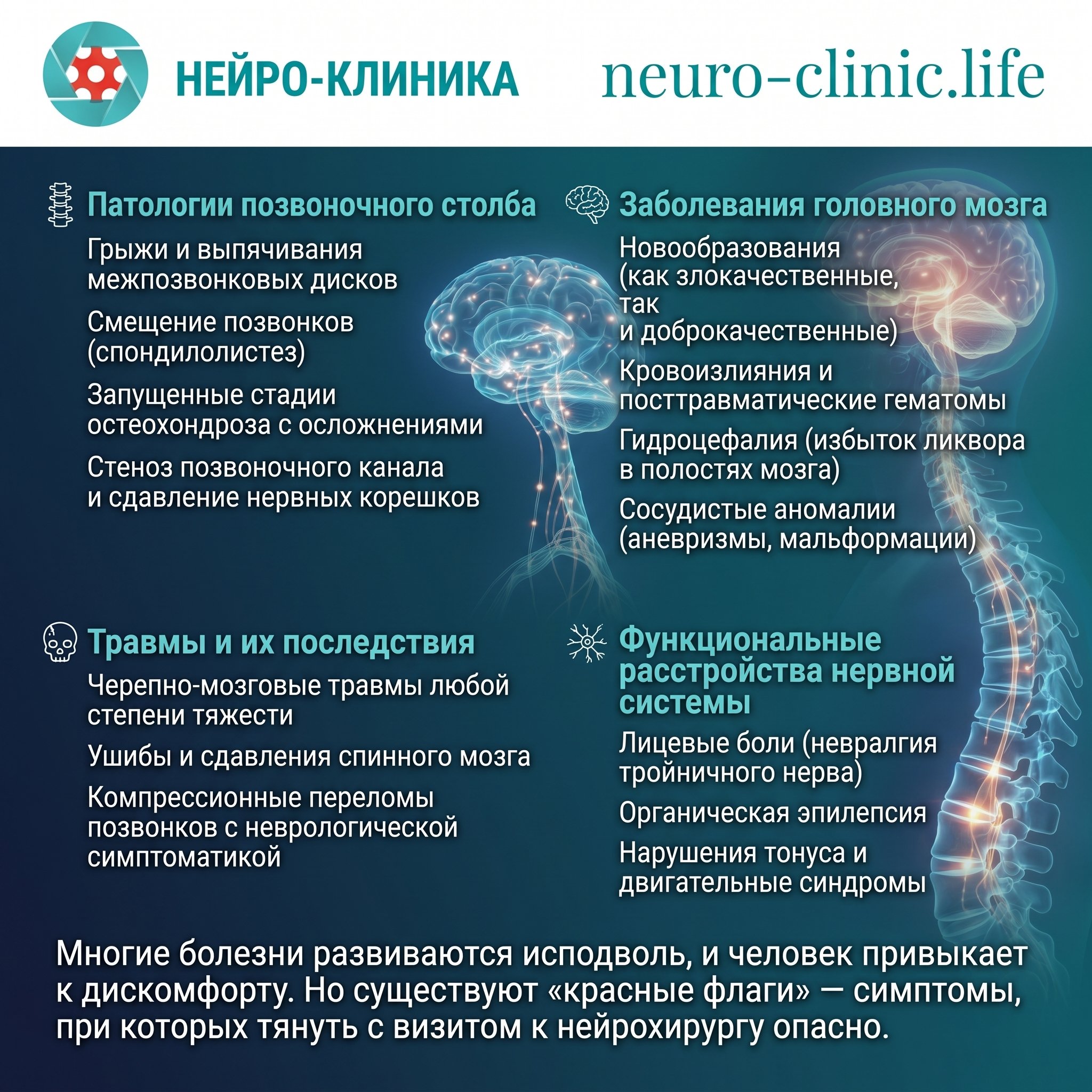
Neurosurgery is not just about operations, but a whole science of restoring the nervous system. A doctor of this profile helps patients with the following problems:
Many diseases develop gradually, and a person gets used to the discomfort. But there are “red flags” — symptoms with which delaying a visit to a neurosurgeon is dangerous.
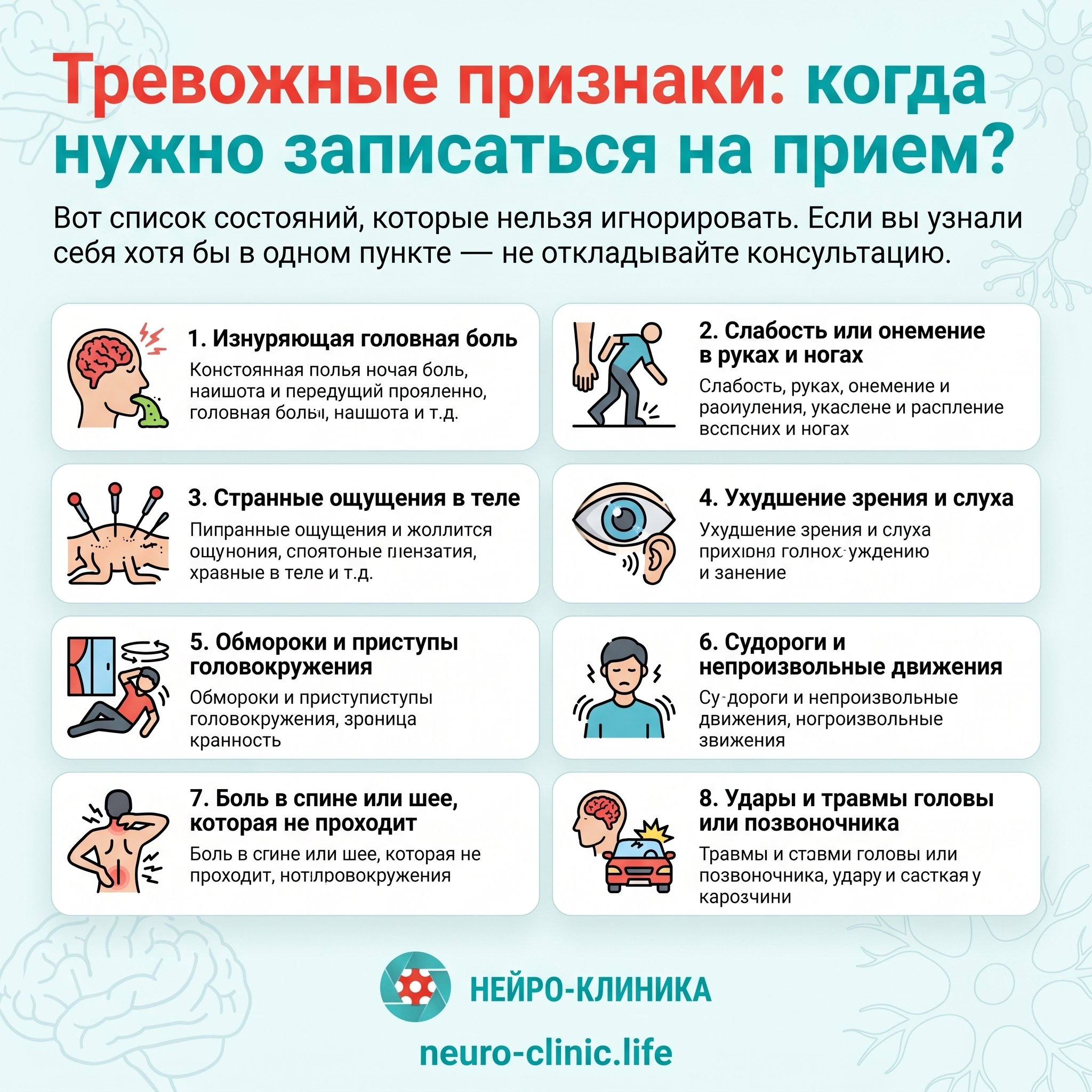
Here is a list of conditions that must not be ignored. If you recognise yourself in at least one point, do not postpone the consultation.
If the head hurts constantly, the pain intensifies, is accompanied by nausea or vomiting, and sometimes confusion, this may indicate intracranial hypertension, a tumour or a vascular catastrophe.
A feeling of “cotton-wool” limbs, unsteady gait, sudden falls are possible signs of damage to the spinal cord or brain.
Burning, tingling, “pins and needles” for no apparent reason often indicate compression of nerve structures by hernias or stenoses.
Double vision, a veil before the eyes, reduced visual acuity or sudden deafness are not just age-related changes. This is how tumours or aneurysms can manifest themselves.
If you lose consciousness or the room “floats” for no apparent reason, this is a reason to check the blood supply to the brain and rule out space-occupying lesions.
First-time epileptiform seizures or twitching of the limbs require urgent neurosurgical assessment.
Especially if it is combined with numbness of the legs, weakness or pelvic organ dysfunction (urinary retention/incontinence). This may be a symptom of a large hernia or spinal cord compression.
Even if you felt fine immediately after a fall or road accident, the consequences (microhaematomas, vertebral instability) may appear weeks later. An examination is necessary in any case.
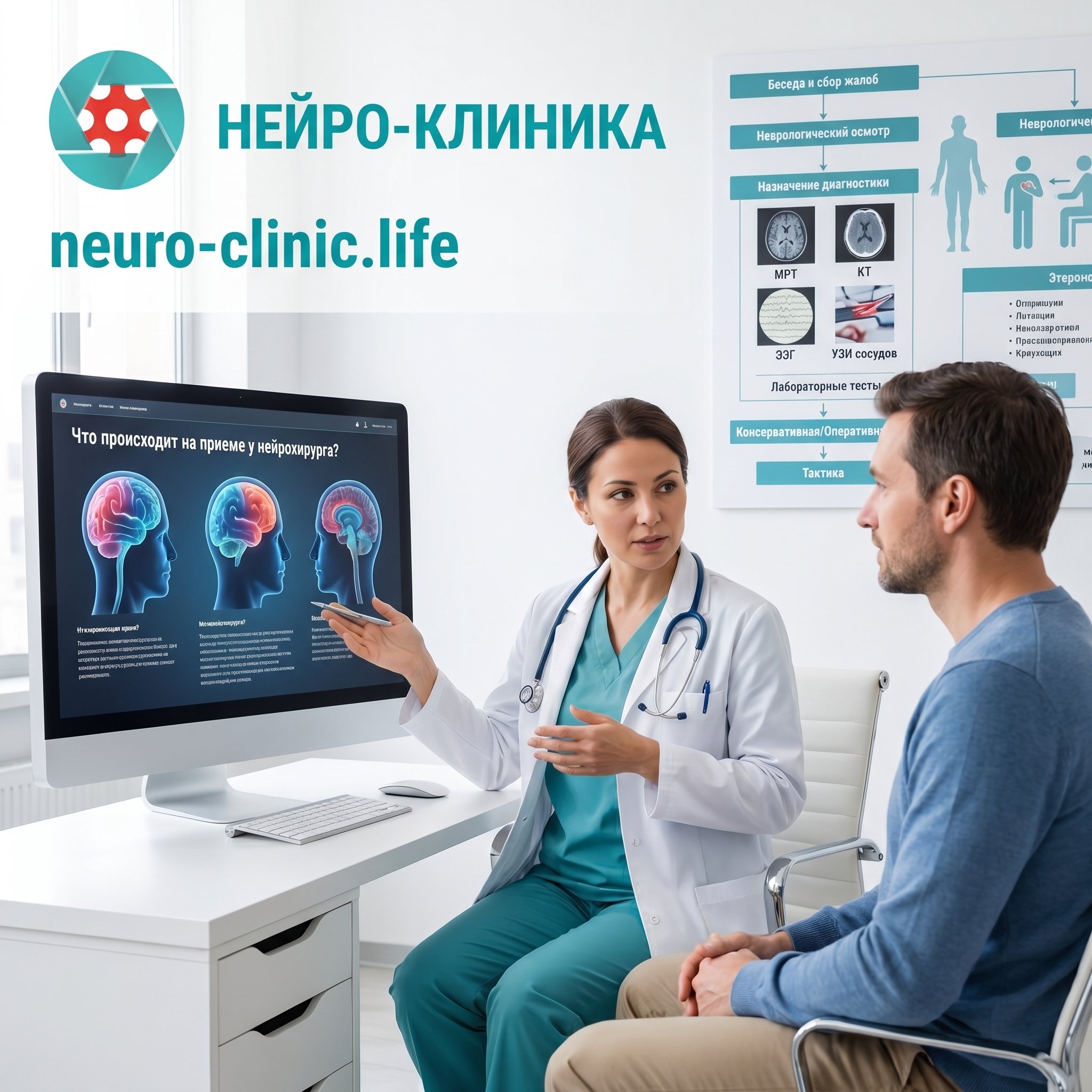
A consultation at our clinic follows a clear algorithm:
What examinations may the specialist recommend?
Based on the diagnostic results, the neurosurgeon chooses the tactics: conservative (medication, nerve blocks, physiotherapy) or surgical.
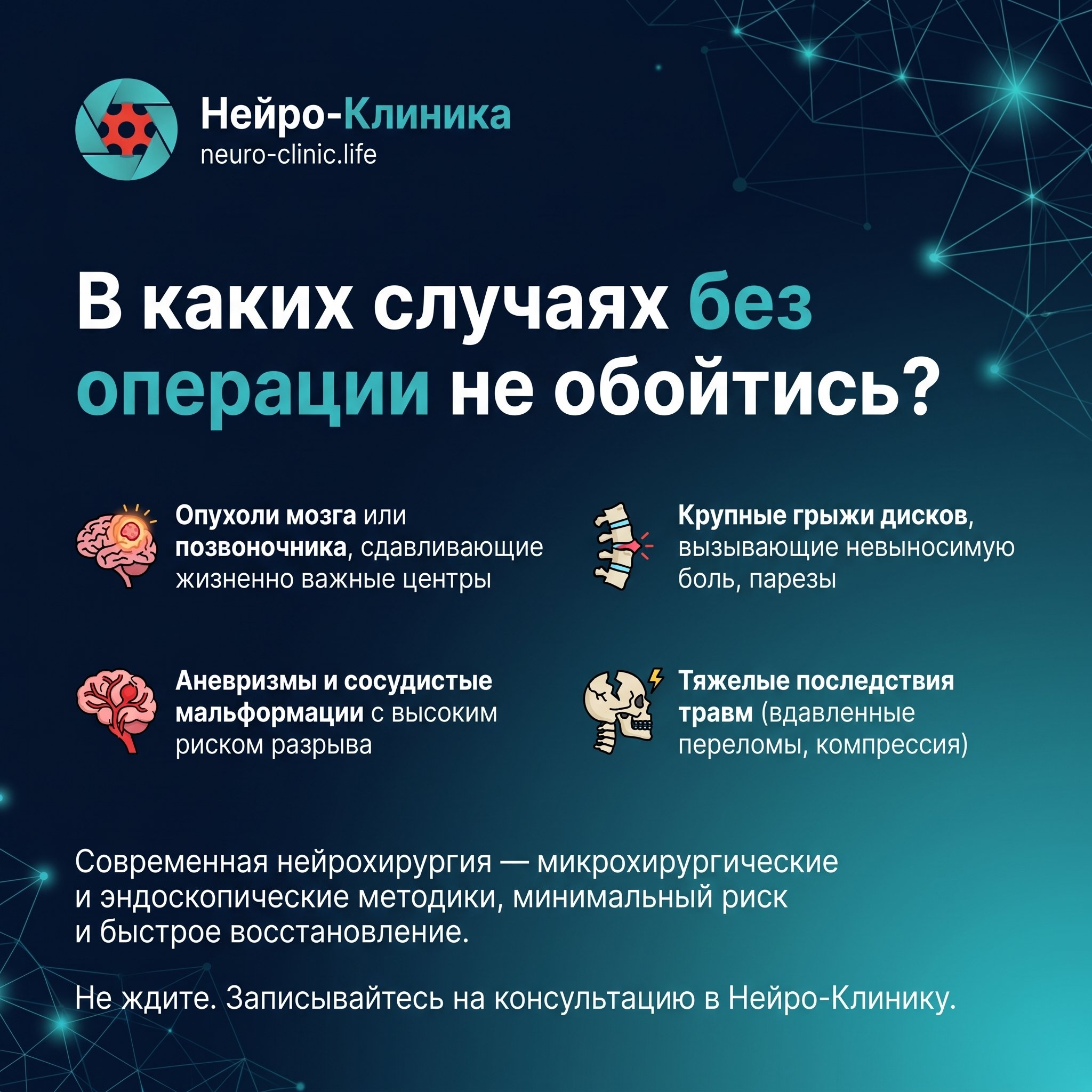
Surgery becomes the only way out in the following conditions:
Modern neurosurgery is no longer days of pain and long bed rest. Microsurgical and endoscopic techniques make it possible to perform interventions through small approaches, with minimal risk and rapid recovery.
Don’t wait for symptoms to become threatening. A timely visit to the doctor can save not only your health, but your life. Book a consultation with the leading specialists at Neuro-Clinic.