The list of services is being updated.
For all necessary information, you can contact us by phone: 8 (8652) 20-55-66


The list of services is being updated.
For all necessary information, you can contact us by phone: 8 (8652) 20-55-66
The list of services is being updated.
For all necessary information, you can contact us by phone: 8 (8652) 20-55-66
Today, let's discuss an important issue that any parent might encounter:
"When to See a Speech Therapist?"
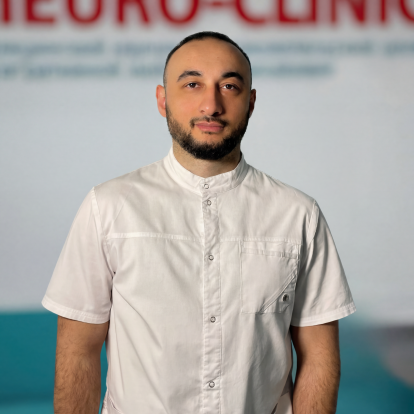
We addressed this question to our speech therapist, Mikhaylenko A.E.:
In recent years, it has become increasingly common on forums and online platforms to see parents asking why their child is silent, has a very limited vocabulary, or speaks as though "with their mouth full." They compare their child’s speech to that of peers or even younger siblings and begin to realize something might be wrong. Many seek help from doctors, only to often hear: "Don’t worry, they’ll start speaking at 3, 4 years old, or later... they’re still young." If parents don't seek opinions from additional specialists, they may be reassured by this response and wait until the child turns three. But even at three, the child doesn’t speak. This cycle can repeat until a specialist finally explains that the child may not just have a speech delay (e.g., motor alalia, which requires specific speech therapy interventions).
So, when should parents start to worry and consult a speech therapist? There is a common stereotype among parents that speech therapists only address pronunciation issues. In reality, speech therapy and neuropsychological techniques have advanced significantly. By the age of two, it’s already possible to identify potential speech difficulties. Early diagnostics of speech development (Benilova S.Y., psychiatrist, PhD; Kosinova E.M., speech therapist; Akhankova T.E., psychiatrist, PhD) allow specialists to assess the child’s development. Speech therapists may also recommend consulting related professionals to rule out non-speech factors affecting development (such as hearing loss or ASD). If the issues are solely related to speech, a speech therapist will work with the child. In some cases, combining medication and hardware therapies with speech therapy sessions and speech massage is necessary.
Before the age of three, a speech therapist can only diagnose a speech delay (SDD). However, a highly qualified specialist may hypothesize about its origin. If therapy is needed at this stage, the speech therapist will develop a correction program tailored to the child’s needs.
It is crucial to determine whether the problem is psychological or purely speech-related. A specialist can guide you in this decision. If the issue is psychological, a psychologist should work with the child initially to establish a foundation for communication. If it’s speech-related, a speech therapist can begin interventions right away. Choosing the right specialists ensures that valuable time isn’t lost, enabling your child to develop psycholinguistic skills in line with age norms.
If the mother experienced a difficult pregnancy and delivery or has chronic illnesses, this can increase the likelihood of neurological issues in the child, which may lead to SDD or global developmental delay (GDD). Such children are at higher risk for speech disorders. To address these concerns, you can visit specialists at our center. They will conduct diagnostics, explain the nuances of your child’s psycholinguistic development, and recommend personalized treatment methods. Our psychologists and speech therapists will develop an individualized correction plan for your child.
Dear parents, it’s important to remember that children develop at different rates. The maturation of the nervous system and speech centers varies among individuals. When organic pathologies are present, more time may be needed to activate or develop these centers.
As a practicing speech therapist, my advice is this: find a single, trusted specialist. Avoid working with multiple speech therapists and closely related professionals simultaneously, as each will have their own perspective on the problem and its correction. Development centers often operate according to their own correction programs and methods, without coordinating strategies for managing your child. This lack of consistency can worsen the child’s mental state and exacerbate speech-related resistance.


 Children
 Adults

 Children
Adults
Children
Adults